
Research
Research highlights: our papers explained in plain language.
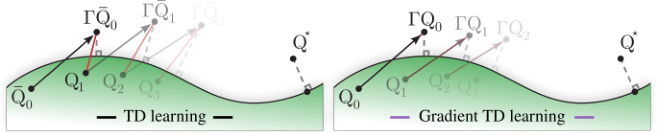
Gradient TD methods that finally keep up: Gradient Iterated Temporal-Difference Learning
Gradient TD methods are stable but have long been too slow to compete. Our RLJ 2026 paper, winner of an Outstanding Paper Award, shows they can match semi-gradient methods, even on Atari.
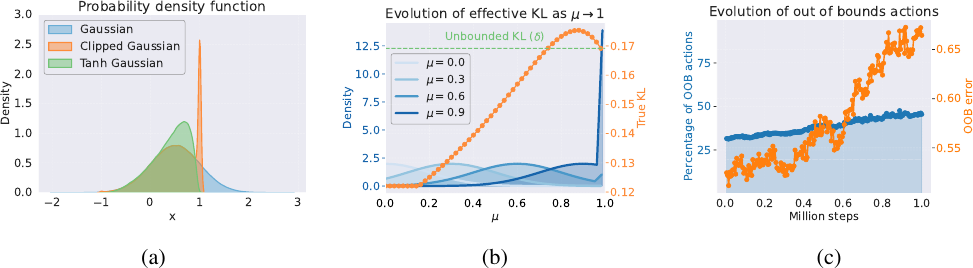
PPO+: taking the on-policy objective seriously
PPO is the default on-policy algorithm, but it relies on many poorly documented tricks. Our RLJ 2026 paper introduces PPO+, a principled revision that closes much of the gap with off-policy methods.
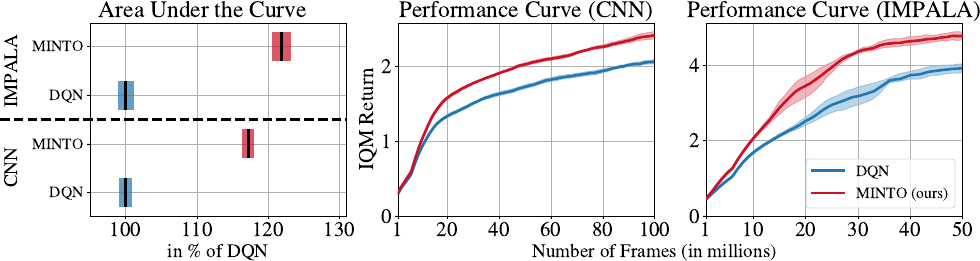
Use the online network if you can: faster and stable value learning with MINTO
Target networks keep deep RL stable but slow it down. Our ICLR 2026 paper shows that a simple minimum between the online and target estimates gets the best of both worlds.
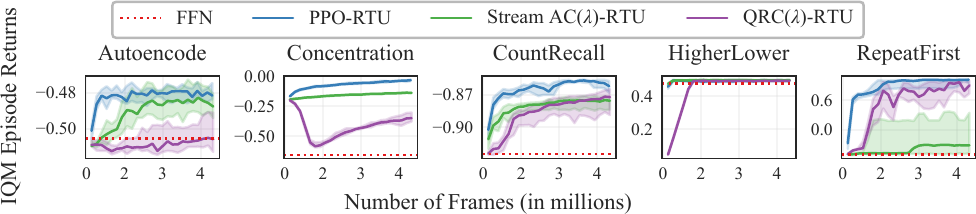
Learning one step at a time, with memory: streaming RL under partial observability
Streaming RL learns like natural agents do: one sample at a time, with no replay buffer. Our EWRL 2026 Best Paper extends it to tasks where the agent must remember the past.
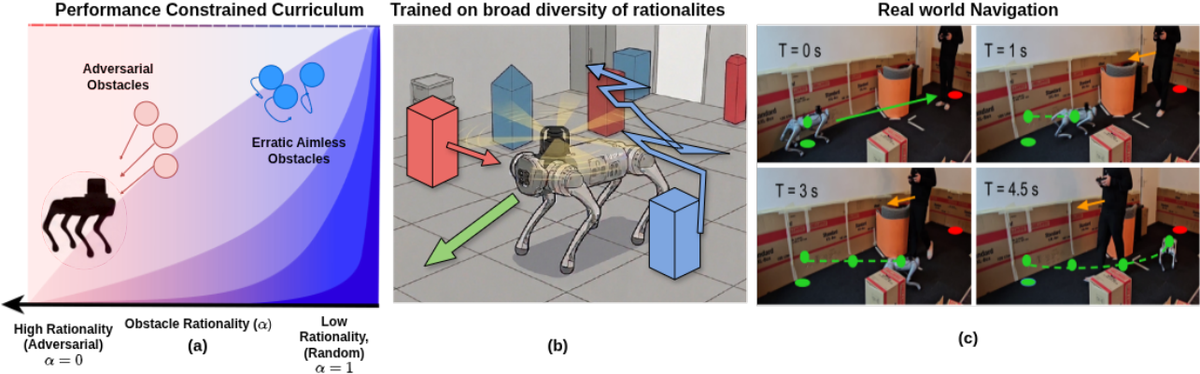
Teaching a legged robot to dodge unpredictable obstacles with RAMEN
Our RA-L 2026 paper trains a quadruped to navigate among moving obstacles by varying how "rational" those obstacles are, and transfers zero-shot to a real Unitree Go1.